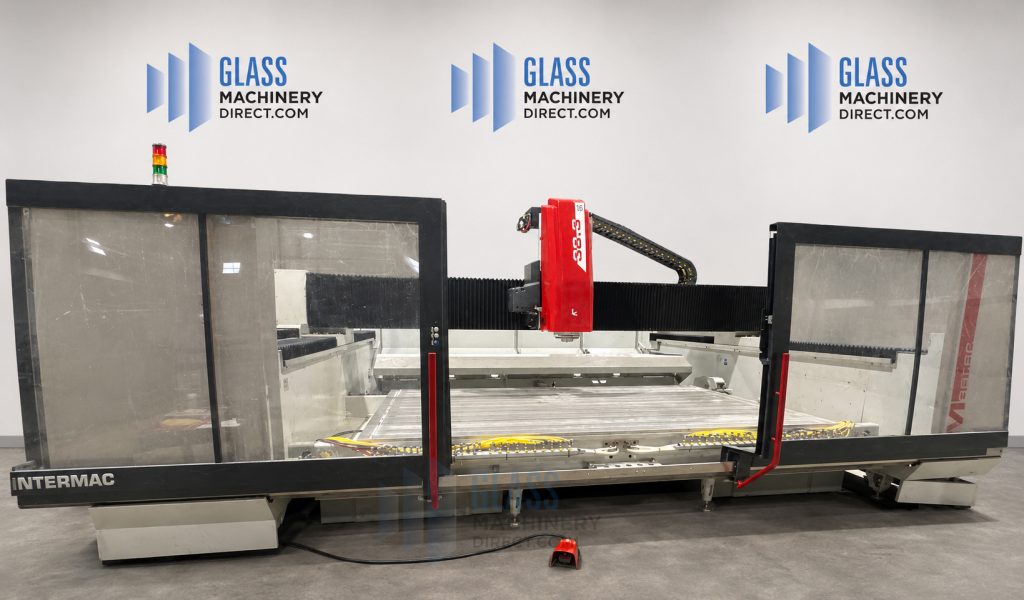
Pre-owned CNC Glass Workstations.
A glass CNC workstation uses programmed movement and selected tools to perform operations such as drilling, milling, edge grinding or polishing. Some configurations also support engraving, beveling and more complex shapes. The CNC label describes the method of control; it does not mean every machine performs the same processes.
Find the right fit for your operation.
Compare the configuration with your glass, your available space and your production goals.
Equipment for your next move.
4 listings
CNC workstations by type.
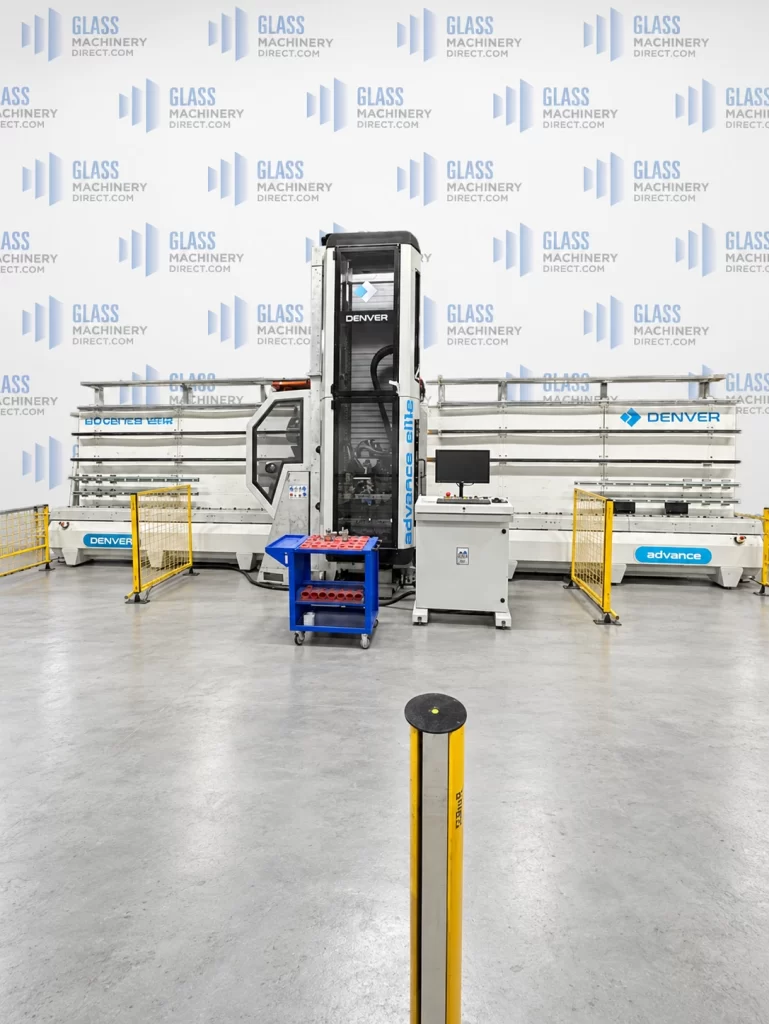
For a used machining center, the usable package extends beyond the main frame. Toolholders, suction cups, positioning stops, software and machine data can all affect whether it is ready for your work. Compare equipment against actual part drawings and finishing requirements, including how the glass will be supported and moved between operations.
Horizontal machining centers
These machines process glass on a horizontal work area, commonly using dedicated supports and vacuum workholding. They can suit perimeter machining, holes and cutouts when equipped accordingly. Check the usable area with the proposed tools and fixtures in place. The largest sheet that fits on the table is not necessarily the largest part that can be completely machined.
Vertical machining centers
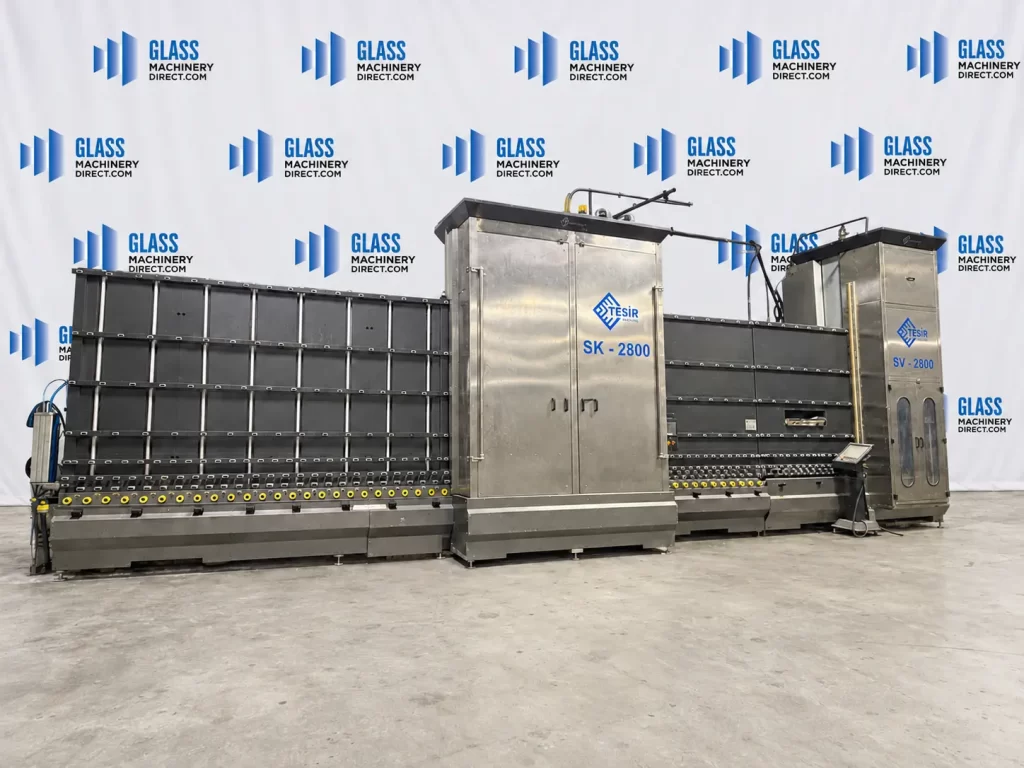
Vertical systems hold and transport glass upright. Depending on the model, they may drill, mill, finish edges or connect with other processing equipment. Compare the loading direction, gripping arrangement and restrictions on part shape. Support close to the working area can be important when processing openings or removing sections from a sheet.
Multi-axis shaping centers
Machines with suitable rotating and tilting heads can perform work that requires the tool to approach at different angles, including variable-angle bevels. Select this capability because your parts require it. Confirm the installed head, axis functions, tooling and software together; a model-family brochure may describe options that a particular used machine does not have.
Where this equipment fits.
CNC glass processing is used for furniture components, mirrors, interior glass, doors and architectural parts that combine edge work with holes, notches or shaped features. Specialized configurations also process curved glass. Build your comparison around the parts you actually manufacture, the finish they need and how frequently the setup changes between jobs.
A clearer view of your next purchase.
It depends on the operations and installed equipment. A machining center may work on blanks prepared elsewhere, while some configurations include scoring or other cutting functions. Confirm how stock sheets become manageable parts and whether the CNC can complete your required cutting and finishing sequence.
Additional axes expand the tool orientations a machine can achieve, but they do not automatically improve every job. Straightforward drilling and edge work may not need an articulating head. Match axis capability to the geometry, and include programming, tool access and setup requirements in the comparison.
Many machining centers support multiple operations through different tools. The particular machine must have the appropriate spindles or head, tool capacity, workholding and software. Ask for a complete process demonstration, including tool changes and any repositioning, rather than assuming that listed capabilities can all be combined on your part.
Explore related equipment.
Good equipment starts with
a good conversation.
Buying, selling, or planning your next investment? Tell us what you need.