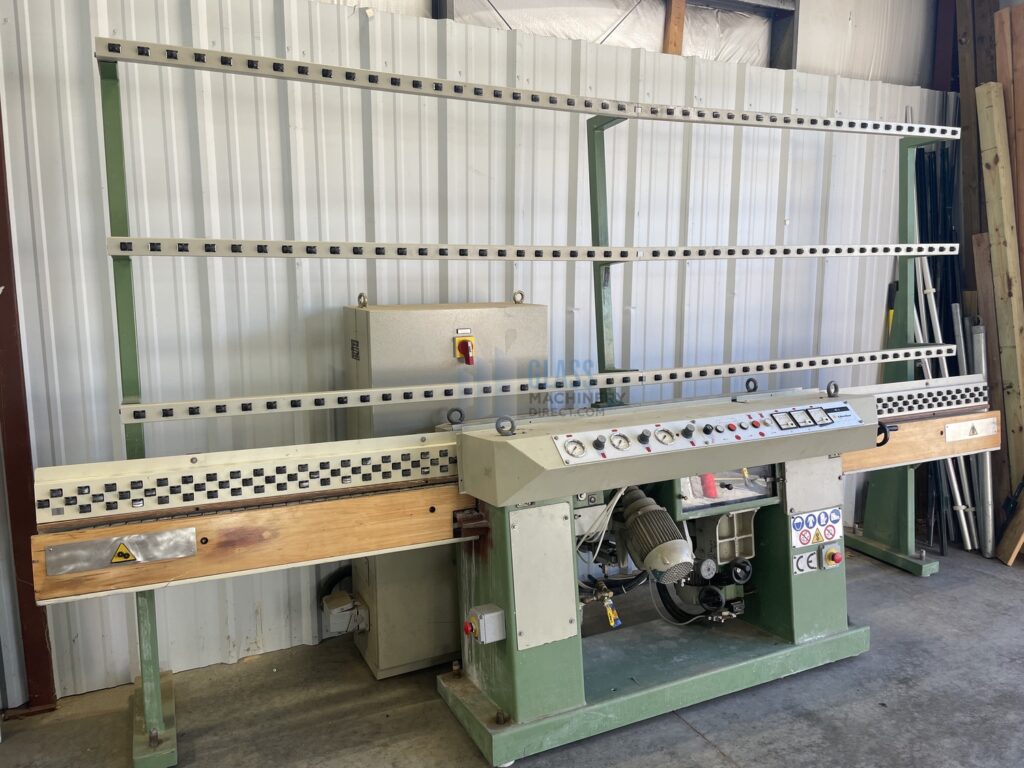
Pre-owned Glass Edging Machines.
Glass edging machines grind and finish the perimeter of a cut piece. The required result might be a polished flat edge, a rounded pencil profile, arrises at the corners or an inclined edge for a particular assembly. Those outcomes require different wheel arrangements and machine capabilities.
Find the right fit for your operation.
Compare the configuration with your glass, your available space and your production goals.
Equipment for your next move.
9 listings
Edging machines by type.
Start your equipment comparison with the edge your customer needs, then consider the shape and size of the glass. Used straight-line edgers, double edgers and shape-processing equipment solve different production problems. A clear sample or edge drawing is more useful than asking for a machine that simply produces a polished finish.
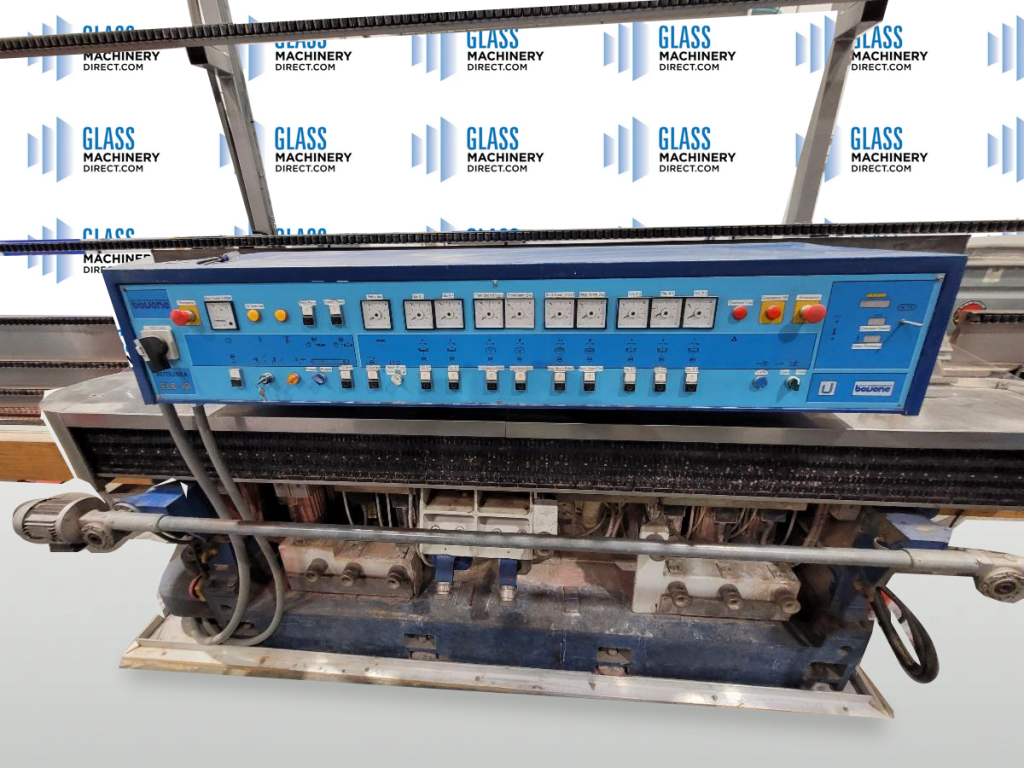
Straight-line edgers and mitering machines
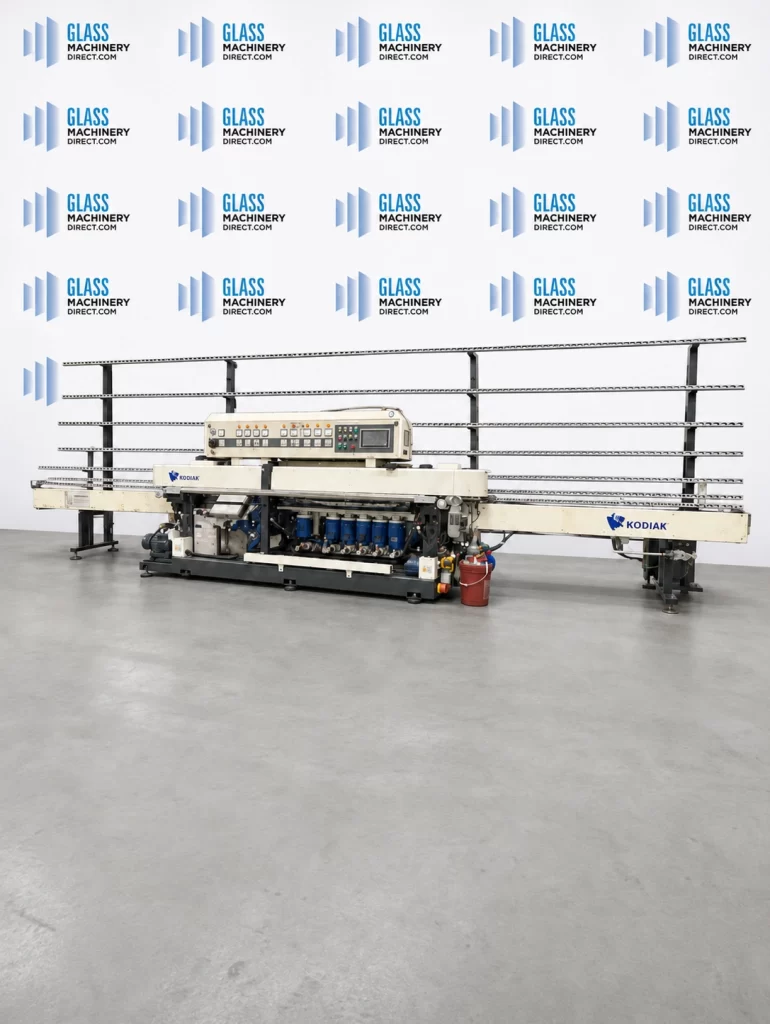
A straight-line edger processes a straight side as the glass passes through its working stations. Fixed-angle and variable-angle configurations serve different profiles. Confirm whether the machine produces the required flat edge, arrises or miter and what changeover involves. The available wheel positions and their assigned functions matter more than a general description of the machine.
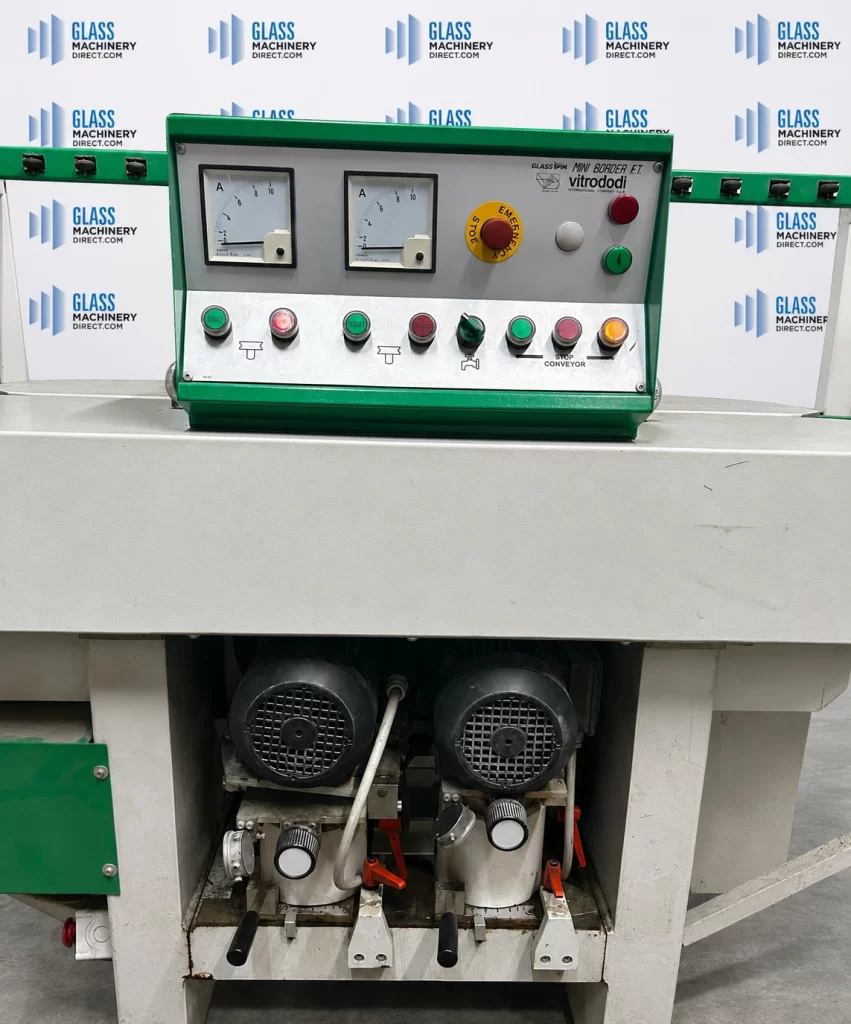
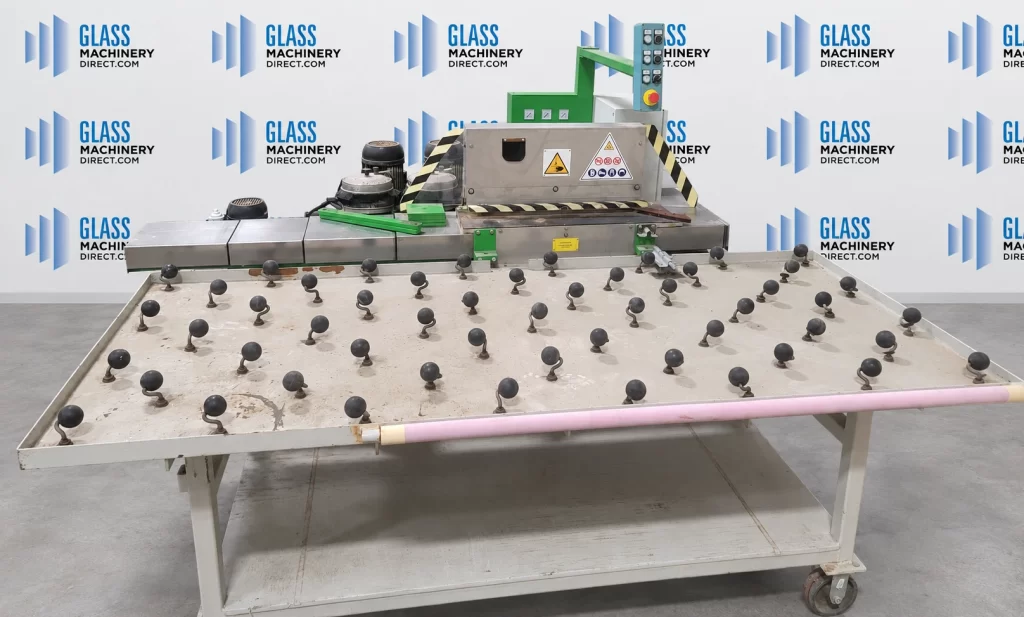
Double edging machines
Double edgers process two opposite sides in the same passage. They are worth considering for repeated rectangular work where parallel edges and consistent dimensions matter. Width adjustment, glass alignment and squaring equipment deserve close attention. A complete four-side line may require additional transfer equipment and another processing stage, so identify the full package being offered.
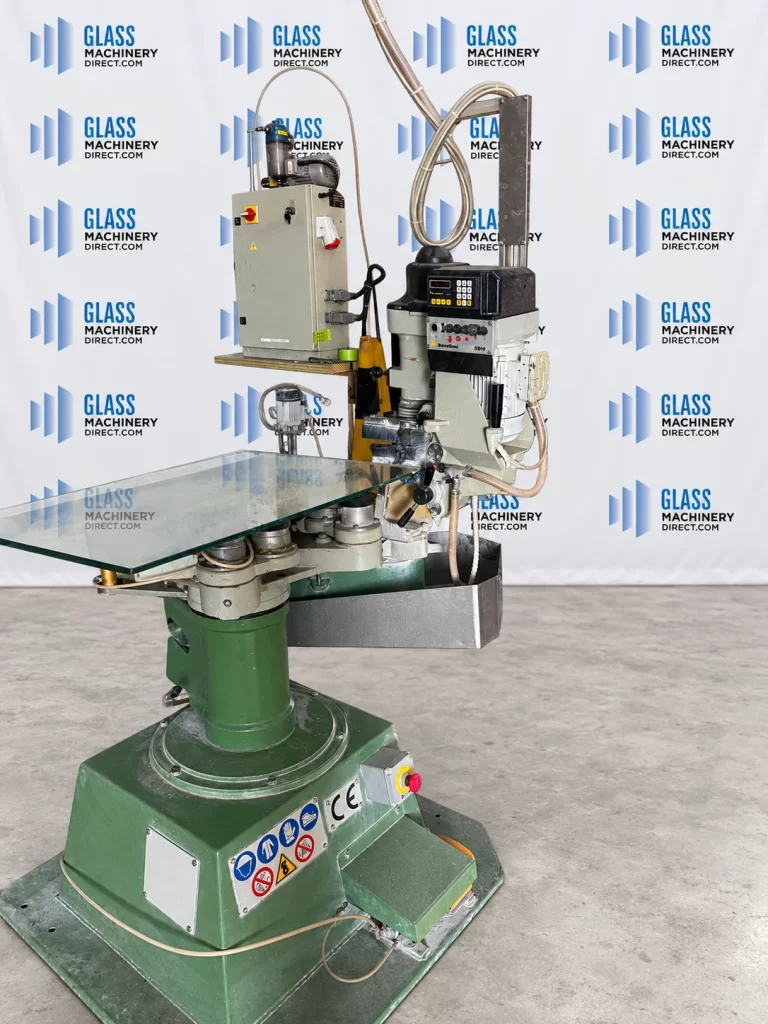
Shape edging equipment
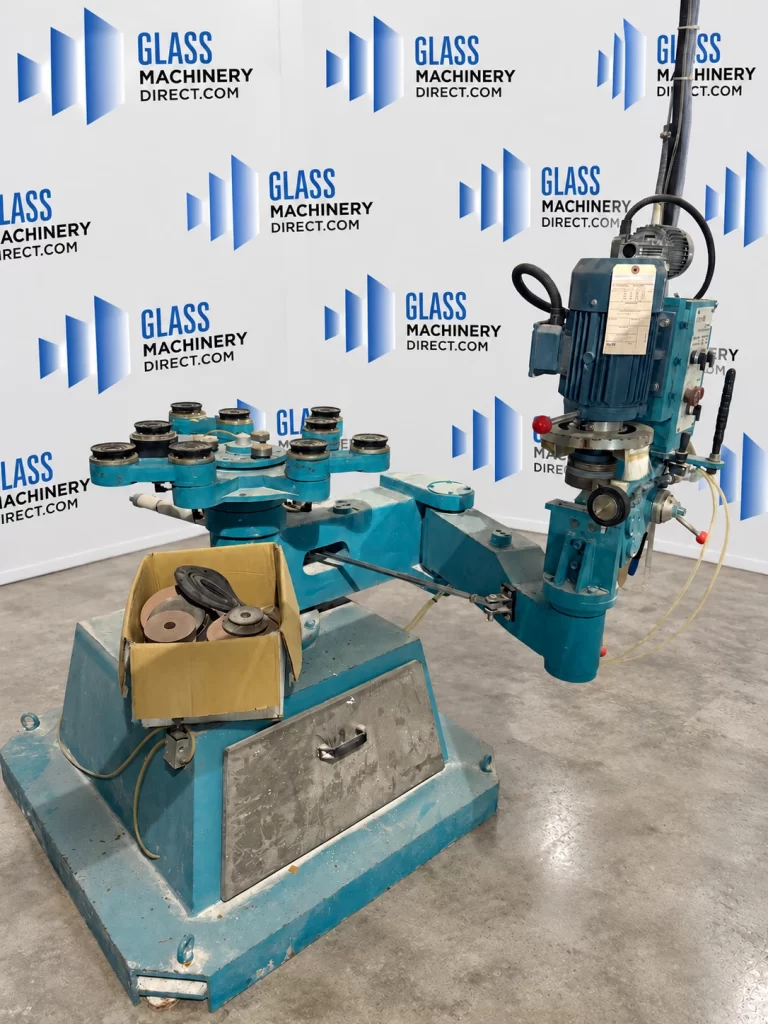
Curved and irregular outlines require equipment that can follow the shape, such as a suitably configured CNC machining center. Confirm the supported profiles, internal corners and method of holding the workpiece. A machine that accepts a non-rectangular sheet does not necessarily finish every curved edge on that sheet; discuss the actual perimeter to be processed.
Where this equipment fits.
Edging equipment is used for mirrors, shelves, tabletops, display glazing, furniture components and architectural glass. An exposed furniture edge may require a different finish from an edge prepared for another fabrication step. Define the intended application and acceptance sample before comparing machine configurations, and check that your normal mix of part sizes can be fed and supported.
A clearer view of your next purchase.
An edger produces the specified profile along the glass edge, such as a flat or pencil edge. A beveler creates an inclined band extending into the face near the perimeter. Some machines combine functions, but a polished edge alone does not establish decorative beveling capability.
Do not assume that it can. Straight-line processing follows a straight edge, even where a machine can support certain non-rectangular pieces. Curved perimeter work normally requires an appropriate shape-processing arrangement. Ask the seller to identify the specific mechanism and demonstrate the outline you need.
Wheel count does not describe the finished result by itself. The sequence of grinding, arris and polishing stations must suit the profile and material, and the feeding and spindle systems must be in suitable condition. Compare a representative finished sample and the configured wheel functions together.
Explore related equipment.
Good equipment starts with
a good conversation.
Buying, selling, or planning your next investment? Tell us what you need.