PRE-OWNED EQUIPMENT. NEW POSSIBILITIES.

/
/
Lifting equipment
Pre-owned glass equipment

Pre-owned Glass Lifting Equipment.

Glass lifting equipment helps move and position sheets between storage, processing equipment, delivery vehicles and installation locations. The right choice starts with the load and the movement required: its weight, dimensions, surface, starting position and final position all matter when comparing used vacuum lifters and glass handlers.

Find the right fit for your operation.

Compare the configuration with your glass, your available space and your production goals.

Equipment for your next move.

2 listings

Saved
Understand the equipment

Lifting equipment by type.

A compact mobile handler, a suspended vacuum lifter and a set of hand cups serve different jobs. Describe your normal work and the largest or most difficult panels you expect to handle. Glass Machinery Direct can use those requirements to discuss relevant equipment or a Machinery Finder request.

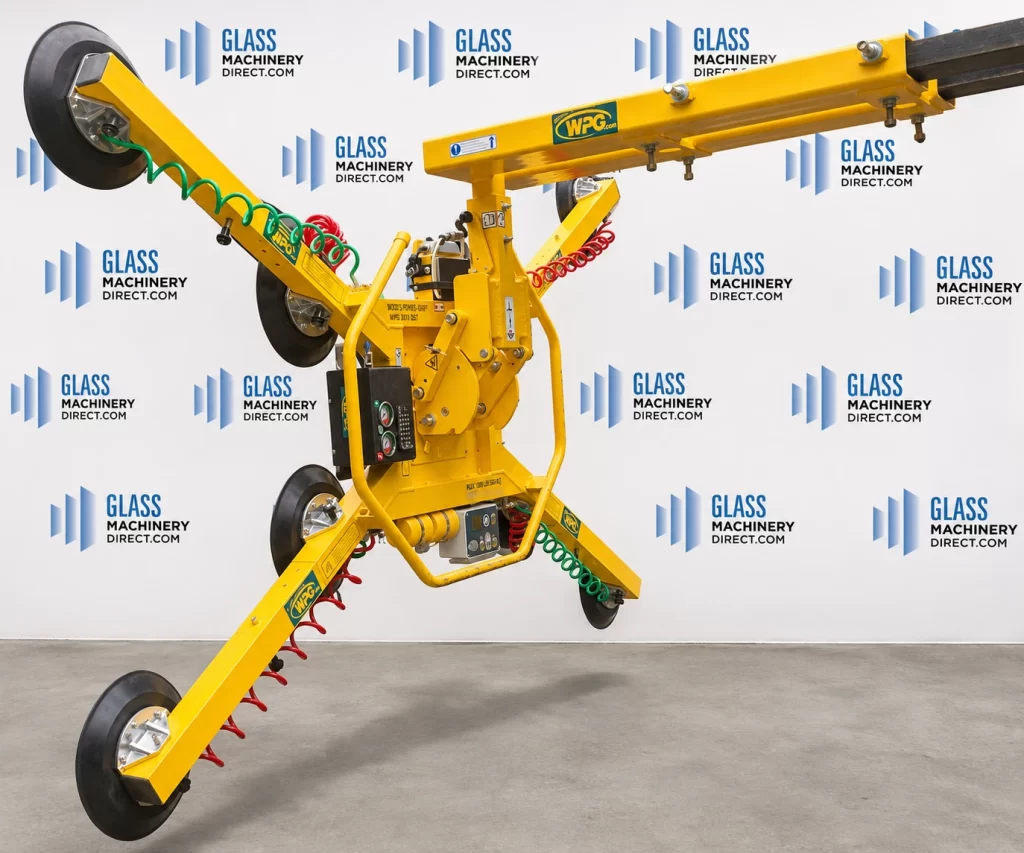
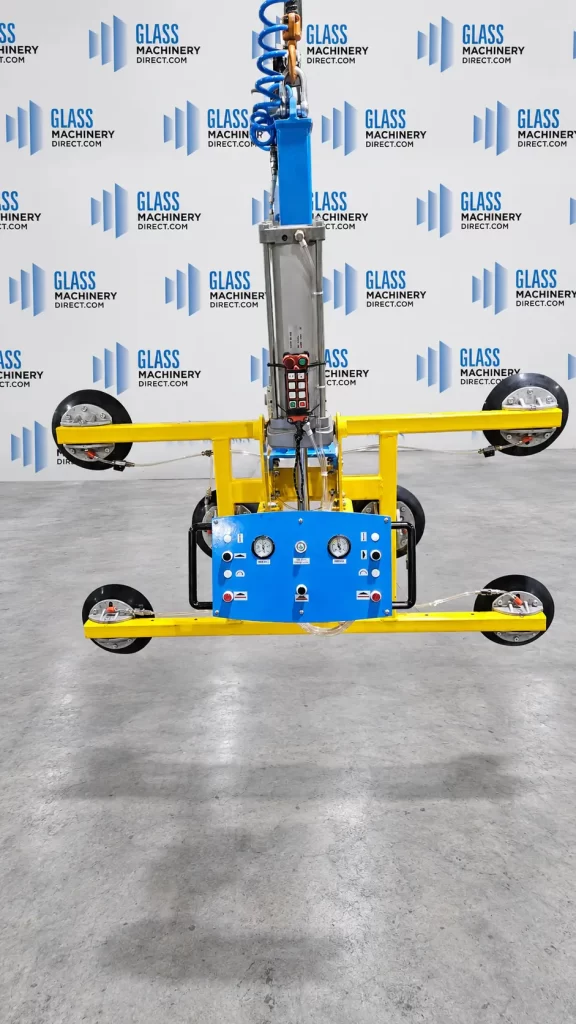
Suspended vacuum lifters

These lifters attach to a suitable lifting system and use a vacuum pad frame to support glass. Configurations may allow rotation, tilting or an adjustable pad spread. Compare the complete frame, attachments and documented load rating with your crane or hoist arrangement. A machine's maximum published capacity does not describe every possible pad configuration.

Mobile glass handling equipment

Wheeled handlers combine panel support with movement and positioning. They can be useful where glass must pass through a workshop or reach an installation position without an overhead crane. Evaluate the actual access route, door openings, turning space and floor conditions, together with reach and positioning needs. Confirm which counterweights, wheels and attachments accompany a used unit.

Hand cups and compact lifting units

Hand cups provide attachment points for suitable manual handling tasks, while compact vacuum units may form part of a larger handling arrangement. Cup design, condition and the contact surface affect suitability. Identify the exact product and its instructions before comparing options; an assortment of loose cups should not be treated as a documented lifting system.

Where this equipment fits.

Glass lifting equipment can support workshop loading, movement between storage and processing areas, vehicle loading and glazing installation. Those tasks can involve very different access and positioning requirements. For example, a lifter selected for a spacious production bay may not suit a confined installation route. Describe the full movement, including both pickup and placement, when evaluating equipment.

Common questions

A clearer view of your next purchase.

Start with the heaviest intended panel and the manufacturer's rating for the proposed configuration. Capacity must be assessed alongside panel dimensions, orientation, surface and attachments. Have a qualified person confirm the complete arrangement; a headline capacity alone is not enough to select a lifter.

No. Pad suitability and attachment depend on the surface and condition of the load as well as the pad itself. Textures, contamination, coatings, curvature and obstructions can affect the choice. Confirm compatibility with the manufacturer for the exact material and lifter configuration.

Send a Machinery Finder request with panel sizes and weights, glass surface details, required movements and access constraints. Include photographs or a layout if available. These details help define the search without assuming that a particular machine or capacity is currently available.

Your next move

Good equipment starts with
a good conversation.

Buying, selling, or planning your next investment? Tell us what you need.