PRE-OWNED EQUIPMENT. NEW POSSIBILITIES.

/
/
Drilling machines
Pre-owned glass equipment

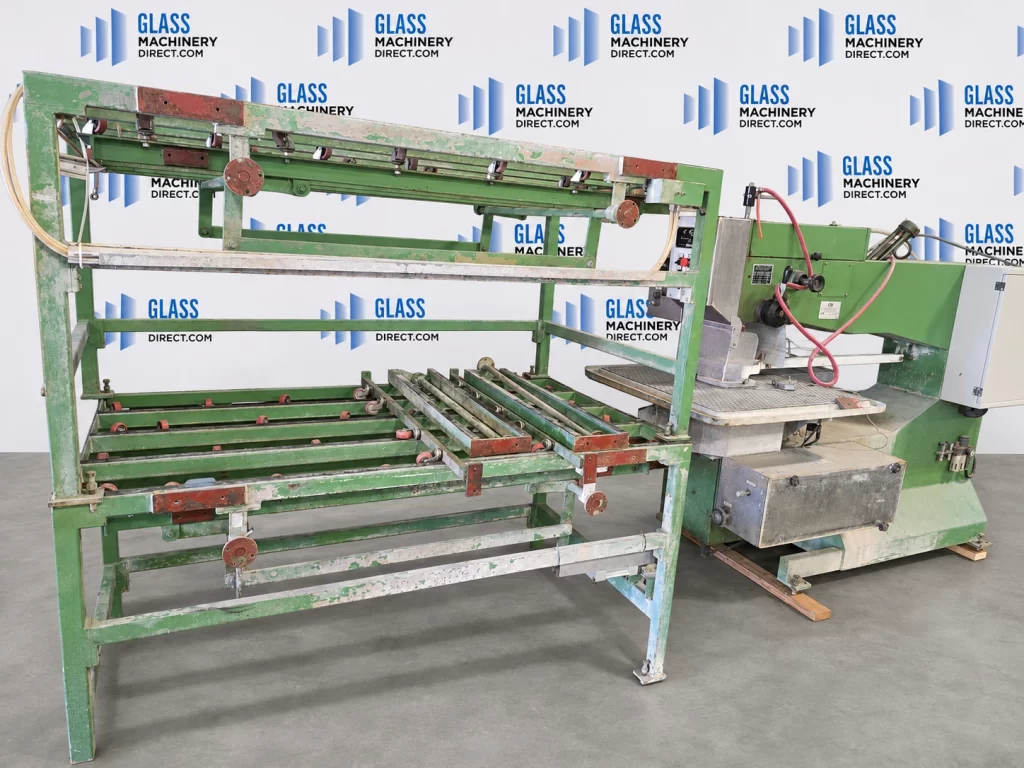
Pre-owned Glass Drilling Machines.

Glass drilling equipment produces openings for fittings, assembly and other fabrication needs. A dedicated drill may make circular holes, while a machining center can add countersinking or milling when appropriately equipped. Those functions should be checked separately rather than assumed from a machine's name.

Find the right fit for your operation.

Compare the configuration with your glass, your available space and your production goals.

Equipment for your next move.

3 listings

Saved
Understand the equipment

Drilling machines by type.

The right used machine must reach the required hole positions while supporting the glass throughout the operation. Begin with dimensioned part drawings, the material and thickness, and the required hole finish. For glass that will be tempered, plan drilling and other fabrication before heat treatment in accordance with the glass manufacturer's instructions.

Opposing-head drilling machines

Opposing heads work from the two faces of the glass. Machines may provide manual, semi-automatic or automatic operating modes, depending on the model. Review the supported hole diameters, head alignment and part-positioning method. Also check the reach from the glass edge; a suitable drill diameter does not guarantee access to every location on a large panel.

NC and multi-head drilling centers

Programmed drilling centers can position glass or tools for a sequence of holes, and some combine drilling, countersinking and milling. Different head and tool arrangements suit different job mixes. Compare the actual sequence for your part, including tool changes, positioning and loading. Confirm any requirement for a straight reference edge on otherwise shaped pieces.

Vertical drilling and milling machines

These systems hold glass upright and may connect with edging or washing equipment. Particular configurations combine opposing heads, tool changing and suction-cup support near the machining area. Ask how larger cutout sections are retained and removed. The gripping arrangement and tool access should be assessed using your intended openings, not only the overall sheet dimensions.

Where this equipment fits.

Glass drilling and milling support hardware preparation for doors, shower enclosures, partitions, balustrades, mirrors and furniture components. Different fittings can call for circular holes, countersinks, slots or more complex cutouts. Use the approved hardware drawing to define the operation, and confirm that the selected equipment can produce the complete feature without an assumed additional capability.

Common questions

A clearer view of your next purchase.

Working from both faces is a common way to manage the drilling process and reduce chipping compared with an unsuitable one-sided approach. The outcome still depends on alignment, tooling, support and operating condition. Ask to see both sides of the completed hole on a representative sample.

Only if the machine has the required milling capability, tooling and control. A dedicated circular-hole drill should not be assumed to produce elongated slots or hardware cutouts. Confirm the complete geometry and whether any part of the feature requires another operation or machine.

Conventional drilling must be completed before tempering. Final hole positions and other fabrication details should be established in advance using the glass manufacturer's processing instructions. A used drill's ability to process annealed glass does not make it suitable for modifying an already tempered pane.

Your next move

Good equipment starts with
a good conversation.

Buying, selling, or planning your next investment? Tell us what you need.